
The Role of Emotional Intelligence in Science Education: Supporting Students Living with Disabilities Through Inclusive Leadership
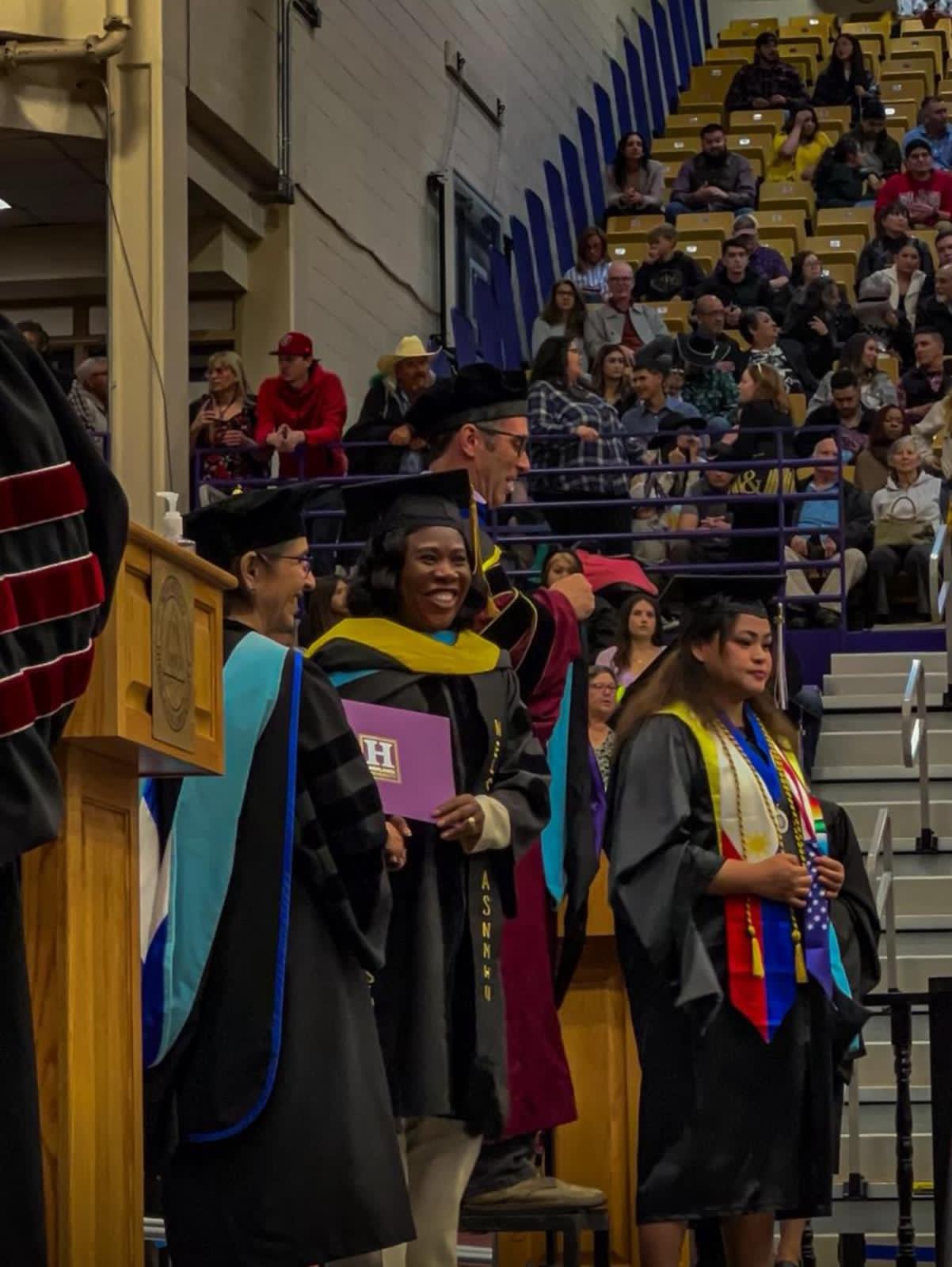
Written by Nelson Uloma Egondu…
Abstract
Students living with disabilities often face both academic and emotional barriers in science classrooms. While adaptive technologies and inclusive pedagogy address structural access, the emotional climate of the classroom is equally critical. This article explores how teacher emotional intelligence (EQ) and inclusive leadership practices foster belonging, confidence, and resilience among disabled learners. Drawing from case study observations of science classrooms at New Mexico Highlands University outreach schools, the study demonstrates that emotionally intelligent teaching—through empathy, adaptability, and positive reinforcement—enables physically challenged students to engage more fully in scientific inquiry. The findings highlight the need for teacher preparation programs to integrate EQ training as a core competency for inclusive science education.
Keywords: Emotional intelligence, inclusive leadership, science education, disabled learners, equity, student resilience
Introduction
Science is a discipline that requires not only technical skills but also perseverance, resilience, and confidence. For disabled students, these requirements can amplify feelings of exclusion when educators fail to consider the emotional and psychological dimensions of learning. Traditional interventions often focus on technology and accommodations but neglect the equally important human dimension: the teacher’s ability to connect emotionally and lead inclusively.
Emotional intelligence (EQ)—defined as the ability to perceive, manage, and respond to emotions in oneself and others—is increasingly recognized as a critical skill in education. For science educators, EQ is essential to creating safe, supportive, and inclusive environments where disabled students feel capable of contributing and excelling. This study argues that teacher EQ, combined with inclusive leadership, transforms science from a source of anxiety into a pathway of empowerment.
Literature Review
Existing research shows a strong link between teacher EQ and student engagement (Salovey & Mayer, 1990; Goleman, 1995). In science, disabled learners often face additional stress due to complex experiments and abstract content (Johnson, 2019). When teachers demonstrate empathy, adaptability, and effective communication, students report higher levels of persistence and trust. Inclusive leadership literature also supports the idea that emotionally intelligent leaders create belonging and equity (Brown & Cooper, 2021).
Despite this evidence, few studies specifically explore the role of EQ in supporting disabled students in science education. This article addresses that gap by proposing that emotional intelligence is not optional but central to inclusive science teaching and leadership.
Methodology
This research employed a qualitative case study at NMHU outreach schools.
Participants: 6 physically challenged students (2 with hearing impairments, 2 with dyslexia, 2 with visual impairments), 3 science teachers, and 2 paraprofessionals.
Data Collection: Classroom observations, semi-structured teacher interviews, and reflective student journals.
Focus: Identification of EQ practices: empathy, adaptability, communication, and emotional support.
Analysis: Thematic coding to identify patterns between teacher EQ practices and student empowerment outcomes.
Ethical approval and participant consent were obtained.
Results
The study revealed four significant outcomes:
Empathy Reduced Anxiety – Teachers who validated student challenges and efforts fostered higher engagement.
Adaptability Promoted Access – Modified experiments and flexible assessments reduced frustration.
Communication Built Trust – Transparent instructions and open dialogue encouraged disabled students to ask questions and participate freely.
Emotional Support Increased Resilience – Students persisted with challenging labs when teachers emphasized effort and growth rather than just outcomes.
Discussion
The findings confirm that emotional intelligence is a driver of inclusion in science classrooms. Adaptive technology and accessible curriculum may open doors, but it is the emotionally intelligent teacher who ensures that students walk through them with confidence. By practicing inclusive leadership, educators can transform physically challenged learners from passive recipients of support into active participants in scientific inquiry.
This study also highlights the need for teacher preparation programs to integrate EQ training. Building emotionally intelligent educators will directly contribute to equity, not just in science but across all disciplines.
Conclusion
Science education for physically challenged students cannot rely solely on tools and accommodations. It must also be human-centered, shaped by educators who lead with empathy, adaptability, and inclusive leadership. Emotional intelligence transforms science into a subject where students living with disabilities not only succeed but also thrive.

This study by Nelson Uloma Egondu demonstrates that teacher EQ is not an “extra” but a necessity for meaningful inclusion in science. The future of equitable science education lies in preparing emotionally intelligent educators who can empower every learner hence her intellectual good reads below:
Book Title: ADVANCING COMPUTER CURRICULUM FOR YOUNG DISABLED STUDENTS THROUGH ARTIFICIAL INTELLIGENCE LEARNING SOLUTION

Amazon Ebook link: https://www.amazon.com/dp/B0F1LPWN1Y
2) Book Title: USELESSING YOUR USEFULNESS
Amazon Ebook link: https://www.amazon.com/dp/B0F1L54CLX
References
Goleman, D. (1995). Emotional Intelligence: Why It Can Matter More Than IQ. Bantam.
SHARE WITH YOUR BROTHERS, SISTERS & NEIGHBOURS!!!

Discover more from NEWS CORNER
Subscribe to get the latest posts sent to your email.
Warning: count(): Parameter must be an array or an object that implements Countable in /home/mynewsco/public_html/wp-content/themes/trendyblog-theme/includes/single/post-tags-categories.php on line 7
About author

You might also like
Algeria Blocks Social Media To Prevent Examination Malpractice
Share on WhatsApp Algerians were unable to access social media accounts on Sunday as students sat national exams in the North African country where authorities are cracking down on cheating.
SHARE WITH YOUR BROTHERS, SISTERS & NEIGHBOURS!!!


Nigeria Set To Shut-Down 66 Illegal Univerty And 68 Polytechnic.
Share on WhatsApp The Minister of Education, Adamu Adamu, says there will be a crackdown on some illegal higher Universities, Polytechnics, Monotechnics and specialised technical and vocational institutions in the
SHARE WITH YOUR BROTHERS, SISTERS & NEIGHBOURS!!!


Science as a Pathway to Inclusion: Bridging Gaps for Disabled Learners
Share on WhatsApp By Nelson Uloma Egondu, Nelson Uloma Egondu Abstract Disabled students face persistent inequities in science education, ranging from inaccessible curriculum materials to limited teacher preparedness. This article
SHARE WITH YOUR BROTHERS, SISTERS & NEIGHBOURS!!!


9th Graduation Ceremony of Ephphatha Academy, Prize Giving Day Ends in Grand Style
Share on WhatsApp Ephphatha Academy, Owerri Imo state has organised its 9th Graduation, Speech and Prize Giving Day. The very colorful event which was held at the Primary School Section
SHARE WITH YOUR BROTHERS, SISTERS & NEIGHBOURS!!!


Guarding Against Libel and Injurious Publications By Journalists –By Chief Charles U.A. Nwankwo
Share on WhatsApp A renowned media practitioner who doubles as a lecturer at International Institute of Journalism, IIJ, Abuja (Owerri Study Centre), Chief Charles U. A. Nwankwo has further advised
SHARE WITH YOUR BROTHERS, SISTERS & NEIGHBOURS!!!


ASUU Set to call off Strike, reach agreement with FG
Share on WhatsApp University students can now go back to lecture halls to learn as the Federal Government has finally reached an agreement with leaders of the Academic Staff Union


0 Comments
No Comments Yet!
You can be first to comment this post!