
Science as a Pathway to Inclusion: Bridging Gaps for Disabled Learners
By Nelson Uloma Egondu, Nelson Uloma Egondu
Abstract
Disabled students face persistent inequities in science education, ranging from inaccessible curriculum materials to limited teacher preparedness. This article examines how science can serve as a pathway to inclusion when teaching strategies, adaptive resources, and collaborative classroom practices are intentionally designed for equity. Using case study data from inclusive science classrooms in New Mexico Highlands University outreach schools, the study highlights the roles of differentiated instruction, peer collaboration, and culturally responsive pedagogy in bridging learning gaps. Findings suggest that inclusive science not only enhances academic outcomes but also fosters belonging, resilience, and participation among disabled learners.
Keywords: Inclusive pedagogy, disabled learners, science education, equity, accessibility, collaboration
Introduction
While inclusion has become a guiding principle in modern education, science classrooms often lag behind in implementing equitable strategies for disabled learners. Rigid lab requirements, abstract content, and inaccessible teaching materials contribute to exclusion. Yet, science is also uniquely positioned to model collaboration, experimentation, and creative problem-solving. This paper argues that science can become a pathway to inclusion if educators adopt strategies that intentionally bridge learning gaps.
Literature Review
Equity and Inclusion: UNESCO and U.S. Department of Education policies on inclusive education.
Science as Inclusive Practice: Studies showing how inquiry-based and collaborative learning support diverse learners (Brown, 2019).
Barriers: Lack of assistive materials, teacher training gaps, standardized testing pressures (Johnson & Rivera, 2020).
Best Practices Emerging: Differentiated instruction, peer tutoring, culturally responsive pedagogy.
Gap: While empowerment models exist, there is little focus on science as a tool for belonging and community inclusion.
Methodology
Design: Case study with mixed qualitative data.
Participants: 10 disabled students (physical, sensory, learning disabilities), 5 science teachers, 3 paraprofessionals.
Tools: Accessible lab kits, peer-learning groups, differentiated lesson plans.
Data Collection: Interviews, observation, assessment results.
Analysis: Triangulation of qualitative and quantitative data.
Results
Accessibility Increases Participation – Modified labs allowed full participation in experiments.
Collaboration Strengthens Inclusion – Peer-learning groups gave disabled students equal voices in problem-solving.
Teacher Adaptation Bridges Gaps – Teachers who used differentiated assessments observed better engagement and test performance.
Discussion
Findings suggest that inclusion in science requires both structural access and cultural belonging. Unlike traditional accommodation models, this study emphasizes collaboration and shared responsibility as tools for inclusion. Inclusion was not just about “helping” disabled students—it was about reframing classrooms as shared spaces of discovery.
Conclusion
Science, when taught inclusively, becomes a pathway for bridging gaps that exclude disabled learners. This study calls on educators, policymakers, and institutions to invest in accessible resources, teacher training, and collaborative practices. In doing so, science education can become a model for how schools can cultivate belonging, resilience, and equity for all students.
CHECK OUT A SCIENCE GOOD READ HERE BY Nelson Uloma Egondu:
Book Title: ADVANCING COMPUTER CURRICULUM FOR YOUNG DISABLED STUDENTS THROUGH ARTIFICIAL INTELLIGENCE LEARNING SOLUTION

Amazon Ebook link: https://www.amazon.com/dp/B0F1LPWN1Y
References
SHARE WITH YOUR BROTHERS, SISTERS & NEIGHBOURS!!!

Discover more from NEWS CORNER
Subscribe to get the latest posts sent to your email.
Warning: count(): Parameter must be an array or an object that implements Countable in /home/mynewsco/public_html/wp-content/themes/trendyblog-theme/includes/single/post-tags-categories.php on line 7
About author

You might also like

Open Versity now approved for NYSC Scheme
Share on WhatsApp A new gate and special Christmas gift has been opened and given to students of the National Open University of Nigeria (NOUN) as President Muhammadu Buhari assents
SHARE WITH YOUR BROTHERS, SISTERS & NEIGHBOURS!!!

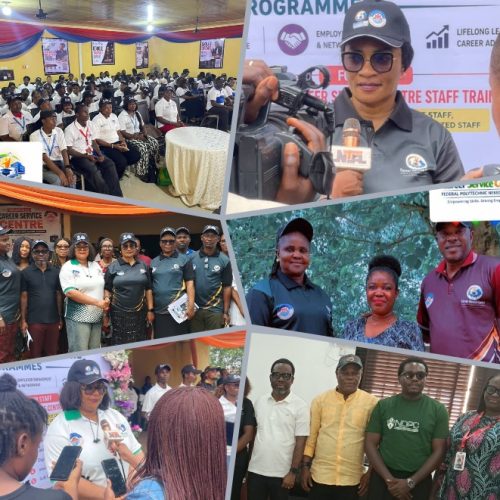
FROM CAMPUS TO CAREER: Federal Polytechnic Nekede Completes Landmark TETFund Employability Programme for 1st Cohort
Share on WhatsApp By Noble Uchegbu Uchechukwu Zachariah Special Assistant to the Rector on Media Matters, Federal Polytechnic Nekede September 26, 2026 For decades, the standard path through higher education
SHARE WITH YOUR BROTHERS, SISTERS & NEIGHBOURS!!!


STRIKE: Education Minister Restates FG’s Policy on “No Work, No Pay” …Debunks Report On Calling ASUU Thieves
Share on WhatsApp Minister of State for Education Rt. Hon. Goodluck Nanah Opiah has restated reasons behind the position of the Federal Government on “no work no pay policy” stance
SHARE WITH YOUR BROTHERS, SISTERS & NEIGHBOURS!!!


Misconduct: FEDPONEK Management Commences Investigation Of Student Involved In Show Of Shame On Social Media
Share on WhatsApp ThankGod Emeh… The management of Federal Polytechnic Nekede has condemned in its entirety the gross misconduct of an acclaimed female student of the institution on social media,
SHARE WITH YOUR BROTHERS, SISTERS & NEIGHBOURS!!!

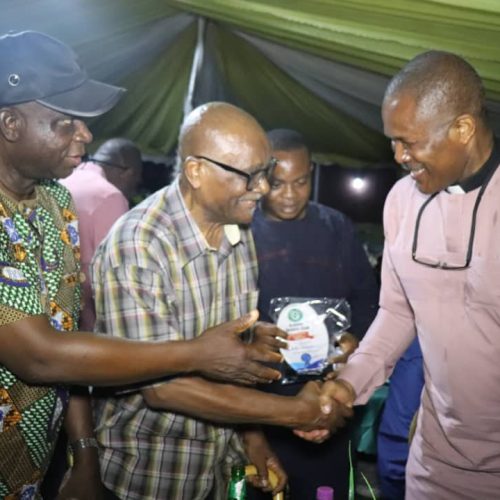
Rector Federal Polytechnic Nekede Honoured By Owerri Sports Club
Share on WhatsApp The award-winning Rector of Federal Polytechnic Nekede, Engr. Dr. Michael Arimanwa, has been honoured by a foremost elite club in Nigeria, Owerri Sports Club. The polytechnic chief
SHARE WITH YOUR BROTHERS, SISTERS & NEIGHBOURS!!!


Dr. Obinna Unegbu Leads Charge to Rescue Igbo Language from Extinction
Share on WhatsApp The African heritage of the Igbo language is far from disappearing, thanks to deliberate efforts by educators like Dr. Obinna Unegbu, who are leading initiatives to preserve


0 Comments
No Comments Yet!
You can be first to comment this post!