
Imo Charter of Equity: Why Isu Nation Deserves Justice Now
By Prof. Protus Nathan Uzorma (The Reformer)…
The Imo Charter of Equity was conceived as a political and moral compass meant to guarantee fairness, inclusion, and balance among the component parts of Imo State. It was designed to prevent political domination by a few powerful blocs and to assure every clan, local government, and political constituency that governance in Imo State belongs to all. Sadly, decades after the creation of the state, the Isu Nation remains one of the clearest examples of political exclusion under a system that was supposed to promote equity.
Since the creation of Imo State in 1976, political power has largely revolved around a small circle of dominant clans and political families. Governors have emerged from different areas of the state, yet Isu Nation has never produced an elected governor of Imo State. The same painful pattern is visible in several strategic offices that define political relevance and state influence. Isu Nation has not produced a governor, senator, speaker of the Imo State House of Assembly, attorney-general of the state, secretary to the state government, or a substantive federal minister of major national reckoning. For a people with immense intellectual resources, economic contributions, and political loyalty, this continued exclusion raises fundamental questions about the sincerity of the Charter of Equity in Orlu zone.
Within Orlu Zone itself, the imbalance is even more glaring. Orlu Zone has often presented itself as politically united, yet power circulation within the zone has not reflected fairness among its internal clans. Certain dominant clans have repeatedly cornered the most influential positions, while Isu Nation has remained politically marginalized. Equity within Orlu has therefore become selective rather than inclusive. Political marginalization does not always happen through open hostility. Sometimes it occurs through systematic neglect, calculated silence, and deliberate exclusion from strategic negotiations. Over the years, Isu leaders and professionals have contributed immensely to the development of Imo State, yet when appointments, endorsements, and succession arrangements are discussed, the Isu voice is often ignored.
The philosopher Aristotle once argued that “the worst form of inequality is to try to make unequal things equal.” His position remains relevant today because justice is not merely about announcing equality in theory; it is about ensuring fairness in practice. A Charter of Equity that continually overlooks one section of the state cannot truly claim moral legitimacy. The American philosopher John Rawls, one of the greatest thinkers on justice and fairness, maintained that a just society must structure opportunities in ways that benefit even the least represented groups. Rawls argued that institutions lose moral credibility when advantages are monopolized by a few while others remain permanently excluded. That observation perfectly mirrors the situation of Isu Nation in contemporary Imo politics.
Even the renowned political philosopher Plato warned that injustice in a state creates internal division and weakens collective unity. A society that marginalizes sections of its people breeds resentment and destroys trust in public institutions. The danger before Imo State today is not merely political imbalance; it is the gradual erosion of confidence in the fairness of the system. The painful truth is that Isu Nation has remained politically useful during elections but politically invisible during power sharing. During campaigns, every political party remembers Isu votes, Isu supporters, and Isu stakeholders. But once power is secured, the clan is pushed back to the margins of governance.
One of the strongest principles of democracy is inclusion. Democracy is not merely about winning elections; it is about ensuring participation, representation, and belonging. When a people are excluded for decades from the commanding heights of political leadership, democracy itself becomes weakened. The continued marginalization of Isu Nation contradicts the spirit behind the Imo Charter of Equity if extended to Orlu zone. Equity means fairness in access, fairness in opportunity, and fairness in political recognition. Equity does not mean concentrating power repeatedly among a few privileged blocs while others are expected to remain perpetual spectators.
There is no doubt that Orlu Zone has produced influential political leaders over the years. Governors such as Achike Udenwa, Rochas Okorocha, and Hope Uzodimma all emerged from Orlu political structures. Yet within the same Orlu Zone, Isu Nation has remained largely excluded from the central power equation. This internal imbalance is what many of Isu Nation’s sons and daughters now describe as inequity within equity. History teaches us that sustainable peace comes only through justice. Martin Luther King Jr. famously declared that “injustice anywhere is a threat to justice everywhere.” The continued exclusion of Isu Nation may appear politically convenient today, but it creates long-term dissatisfaction capable of weakening political unity within the state.
No serious political observer can deny the strategic importance of Isu Nation. The clan possesses educated elites, experienced administrators, respected traditional institutions, entrepreneurs, clergy, scholars, and politically active youths. Isu has consistently contributed to the stability and electoral strength of political parties in Imo State. Therefore, denying the people meaningful political inclusion cannot be justified on the grounds of competence or capacity. The time has come for sincere reflection among political leaders in Imo State. The Charter of Equity must move beyond propaganda and become a living principle rooted in fairness. Political arrangements that permanently exclude some groups while empowering others repeatedly are unsustainable.
As the next electoral cycle approaches, political parties must demonstrate practical commitment to inclusion. One immediate step toward correcting this imbalance is for all major political parties in Imo State to zone their deputy governorship positions to Isu Nation. Such a decision would not only acknowledge years of exclusion but would also restore confidence in the sincerity of equity discussions across the state. This call is not a declaration of hostility against any clan or political bloc. It is a patriotic appeal for justice, balance, and inclusiveness. No society develops when sections of its population feel politically abandoned. Unity cannot thrive where fairness is absent.
The philosopher Amartya Sen emphasized that justice must be visible in the lived experiences of the people. In other words, citizens must not only hear promises of fairness; they must see and feel fairness in appointments, opportunities, and representation. Unfortunately, many sons and daughters of Isu Nation believe that fairness has remained theoretical rather than practical in Imo politics. Political power should never become hereditary property for a few clans. Public offices belong to the people collectively, not to entrenched political networks. The future of Imo State depends on widening participation and dismantling structures of exclusion that have persisted for decades.
The political class in Imo State must therefore rise above narrow interests and embrace genuine reconciliation through inclusion. If the Charter of Equity must survive as a respected political doctrine, then it must recognize the legitimate aspirations of Isu Nation and other marginalized groups. The demand for inclusion is neither rebellion nor entitlement. It is a democratic request grounded in justice, fairness, and historical reality. Isu Nation is not asking for charity; it is demanding recognition as an equal stakeholder in the destiny of Imo State. History will ultimately remember those who defended justice over convenience, inclusion over domination, and equity over political selfishness. The moment has come for Imo State to prove that the Charter of Equity is more than a slogan. The moment has come to give Isu Nation its rightful place in the political future of the state.
SHARE WITH YOUR BROTHERS, SISTERS & NEIGHBOURS!!!

Discover more from NEWS CORNER
Subscribe to get the latest posts sent to your email.
Warning: count(): Parameter must be an array or an object that implements Countable in /home/mynewsco/public_html/wp-content/themes/trendyblog-theme/includes/single/post-tags-categories.php on line 7
About author

You might also like
MEDIA AGENDA SETTING: Imo Guber Election 2023 And The Way Forward
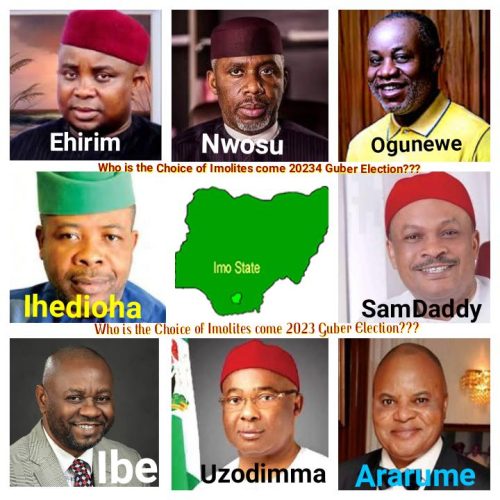
As far as we are concerned, all these men and women are eligible to contest for any elective position of their choice but all that Imolites want is youthful leadership anchored on good governance, people oriented leadership for the betterment of Imo as our State has not had it good outside the leadership of late Dem Samuel Onunaka Mbakwe of blessed memory.
SHARE WITH YOUR BROTHERS, SISTERS & NEIGHBOURS!!!

Imo 2019 Guber: Ohakim tours Orlu, promise to Restore & get Imo working
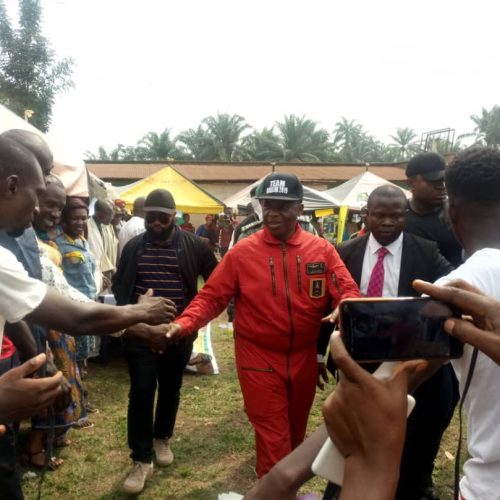
Share on WhatsApp By Ifeany Onyeulo, OWERRI The Accord party governorship in Imo state, Sir Ikedi Ohakim has in strong terms decried the infrastructural decay in the state and promised
SHARE WITH YOUR BROTHERS, SISTERS & NEIGHBOURS!!!


One Nigeria: IYA Asks Gov Wike to Rebuild Port Harcourt Central Mosque
Share on WhatsApp The apex socio-cultural youth organization in Igboland, Igbo Youth Assembly(IYA), Worldwide, has asked the Governor of Rivers State, Nyesom Wike, to rebuild the Central Mosque which he
SHARE WITH YOUR BROTHERS, SISTERS & NEIGHBOURS!!!


Are Tinubu’s Key Appointees Endangered Ahead 2027 Elections?..As Campaign of Calumny Thickens
Share on WhatsApp Reliable intelligence has reportedly emerged detailing a late-night meeting at Transcorp Hilton, Abuja, involving seven prominent leaders of a major opposition party and representatives of a new
SHARE WITH YOUR BROTHERS, SISTERS & NEIGHBOURS!!!


Over 20 AA Members Defect to SDP In Imo
Share on WhatsApp In the heart of Owerri Municipal Council, Imo state recently, a political gathering took place to further draw a new direction towards the next gubernatorial election in
SHARE WITH YOUR BROTHERS, SISTERS & NEIGHBOURS!!!


Reasons for not reducing Age Qualification for Senate, Governor – Ekweremadu
Share on WhatsApp The Deputy Senate President, Ike Ekweremadu, has given reasons why the National Assembly did not reduce the age limit for aspirants vying for governorship and presidency. In


0 Comments
No Comments Yet!
You can be first to comment this post!