
South Sudan Is Not Just a Crisis, It’s a Gendered Catastrophe
By Chinaza Justina Egere…
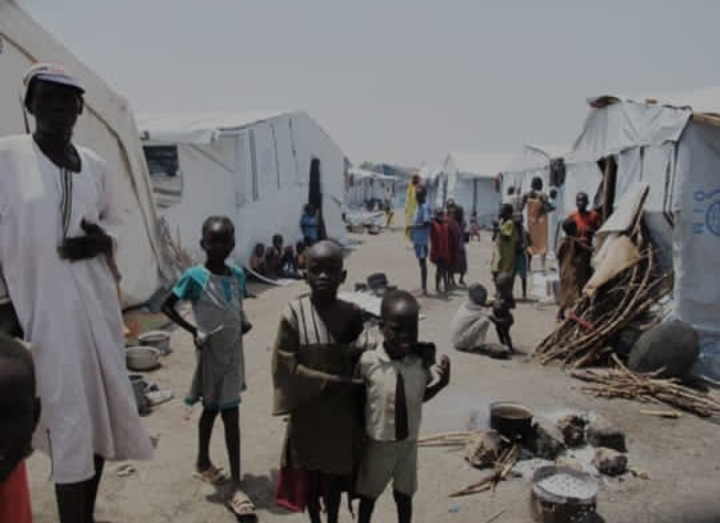
As the world turns its attention to South Sudan’s deepening food crisis and the resurgence of armed conflict, one critical aspect remains overlooked: this is not just a humanitarian emergency; it is a crisis steeped in gendered violence.
Conflict, famine, and displacement do not impact everyone equally. Women and girls bear unique and devastating burdens: sexual violence, forced marriage, and systemic exploitation. For boys, the price of war often includes forced recruitment, the erasure of childhood, and lasting trauma. These gendered dynamics are not incidental. They are woven into the fabric of the conflict itself.
According to the FAO and WFP’s April–July 2025 report, over 7.7 million people, nearly 60% of South Sudan’s population, are facing acute food insecurity. In regions like Upper Nile and Unity State, clashes between government forces and armed groups have displaced tens of thousands and left entire communities without shelter or aid.
The bombing of a Médecins Sans Frontières hospital in Fangak earlier this year exemplifies the escalating violence against civilians. But statistics only tell part of the story. Behind every number is a girl married off to secure food, a woman assaulted while fleeing violence, or a boy carrying a rifle taller than himself.

The violence women and girls face in South Sudan is not new, and it is not random. Sexual violence has been used as a weapon of war by both state and non-state actors. Families under pressure often give their daughters in marriage as a survival tactic. In displacement camps, where people seek refuge from conflict, women and girls are frequently subjected to further abuse by those meant to protect them. These are not isolated tragedies; they reveal a pattern of structural violence rooted in gender inequality.
Boys, too, suffer. Many are forcibly conscripted by militias, pulled from their homes and schools to serve in brutal, often deadly roles. Some are as young as ten. The trauma they carry and the normalization of violence they’re exposed to will shape the next generation and perpetuate cycles of conflict. Yet the global response rarely addresses these realities directly.
Too often, gender-based violence is treated as a tragic side effect of war rather than a defining feature. International aid tends to focus on food, shelter, and ceasefire agreements, all essential, but too seldom are trauma care, girl-focused education initiatives, or reintegration programs for child soldiers made central.
Equally concerning is how local, women-led organizations, which do the difficult, often dangerous work on the ground, remain underfunded and unheard. These groups are trusted by the communities they serve. They should be leading the response, not being sidelined by larger agencies with less contextual knowledge.
Although South Sudan’s civil war officially ended in 2020, violence continues to shape life for millions. The breakdown of the 2018 peace agreement, renewed clashes in Upper Nile and elsewhere, and the collapse of essential services point to a slow return to crisis. And as always, it is women and children who suffer the most. What South Sudan faces today is not simply a political failure or a food emergency. It is a gendered catastrophe. Lasting peace requires more than negotiations and food aid. It demands justice for survivors, investment in local leadership, and a future where one’s gender does not dictate whether they are protected or preyed upon.
Chinaza Justina Egere is a doctoral fellow in French and Francophone Studies at Purdue University. Her research focuses on gendered narratives of genocide, postcolonial trauma, and African displacement. She has presented her work at the American Comparative Literature Association, the GHRAD Conference, and the Igbo Studies Association.
SHARE WITH YOUR BROTHERS, SISTERS & NEIGHBOURS!!!

Discover more from NEWS CORNER
Subscribe to get the latest posts sent to your email.
Warning: count(): Parameter must be an array or an object that implements Countable in /home/mynewsco/public_html/wp-content/themes/trendyblog-theme/includes/single/post-tags-categories.php on line 7
About author

You might also like

Buhari, 10 Governors And Ministers To Visit South Africa On Wednesday
Share on WhatsApp President Muhammadu Buhari will On Wednesday depart Abuja for South Africa, with 10 governors and Ministers following an invitation by President Cyril Ramaphosa. The three-day trip which
SHARE WITH YOUR BROTHERS, SISTERS & NEIGHBOURS!!!


Nigerians must work to unite the country, not incite another war, says Buhari
Share on WhatsApp President Muhammadu Buhari on Wednesday urged all Nigerians to decide not to allow the country to witness another civil war by their actions and inactions. He said
SHARE WITH YOUR BROTHERS, SISTERS & NEIGHBOURS!!!

The key to Save Nigeria Forest Lies in the Hands of Hunters –Obasanjo
Share on WhatsApp By Chika Uju… The former president of the federal Republic of Nigeria, chief Olusegun Aremu Okikiola Obasanjo GCFR recently, disclosed that the key to safeguarding the Nigeria
SHARE WITH YOUR BROTHERS, SISTERS & NEIGHBOURS!!!

Tito Omokhowa Asekhame receives Fellowship Award
Share on WhatsApp By Eleugu Mgbemgasa… Baptist College of Theology Obinze (BACOTHO) in Owerri West Local Government Area of Imo State, has conferred Fellowship Award on QS (Barr.) Tito Omokhowa
SHARE WITH YOUR BROTHERS, SISTERS & NEIGHBOURS!!!


Imo ENTRACO Begins ‘Operation Remove Broken Down Vehicles, Scrabs On Roads
Share on WhatsApp Imo State Environmental Transformation Commission, ENTRACO has authorized the services of Donpat Classic Multi Concept Ltd to check the menace of dumping broken down vehicles and scrabs
SHARE WITH YOUR BROTHERS, SISTERS & NEIGHBOURS!!!

Breaking: Federal Polytechnic Nekede Invents Fuelless Generator
Share on WhatsApp In a blaze of history, the Federal Polytechnic Nekede has invented a fuelless and fumeless generator. The 7.5kva generator does not run with fossil fuel and does


0 Comments
No Comments Yet!
You can be first to comment this post!