
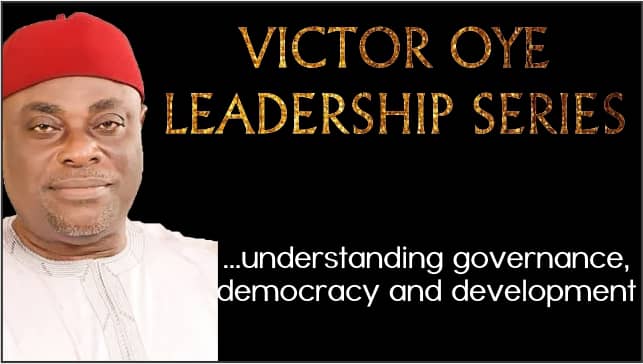
OYE: Confronting Nigeria’s Paradox Of Plenty
By Collins Opurozor.
Last Wednesday, President Mohammadu Buhari inaugurated the National Steering Committee for the Preparation of Medium Term Development Plan (2021- 2025) and Nigeria Agenda 2050. These Plans, said President Buhari, would lift one hundred million Nigerians out of poverty.
In his words, “The main objectives of these successor plans are to lift 100 million Nigerians out of poverty within 10 years, particularly given the World Bank’s projection that Nigeria will become the world’s third most populous country by 2050 with over 400 million people.”
In 2005, former President Obasanjo had also launched the Vision 20:2020. According to the goals of the Vision, “Nigeria will be among the 20 largest economies of the world by 2020. By 2020, Nigeria will have a large, strong, diversified, sustainable and competitive economy that effectively harnesses the talents and energies of its people and responsibly exploits its natural endowments to guarantee a high standard of living and quality of life to its citizens.”
It will be needless to be fixated with the failures of the Vision 20:2020. What is required, instead, is a broader engagement with the dynamics of Nigeria’s political economy and the disservice which the rentier state in Nigeria has wrought on the country’s attempts at development. The remarks made by the National Chairman of APGA who also is a member of the National Steering Committee of this Agenda 2050, Ozonkpu (Dr.) Victor Ike Oye, briefly after the inauguration underscored the imperatives of rejigging Nigeria’s political economy and raised the hopes for a more prosperous Nigeria under a regime of probity, prudence and accountability.
For Dr. Oye, the stressful economic environment in Nigeria provides an opportunity for creativity and prudence, just as the eras of oil boom fanned the unhelpful culture of prodigality, extravagance and abuse of public trust. This is the paradox of plenty. It has also been described as the resource-curse theory. Oil boom has mostly become oil doom, and affluence has often become affliction.
Throughout history, prudent and accountable governance, not fickle fate or oil boom, has led to the development of societies. The economic miracles of the Asian Tigers bear out the testimony that nations have increasingly lifted their peoples out of poverty when they develop the capacity to enthrone an order of fiscal discipline, prudent resource allocation and visionary plans which do not yield to political vagaries. This was the magic wand of Lee Kuan Yew that moved Singapore from a poor Third World country to a First World, developed nation in a single generation.
By establishing an international reputation for accountable governance, zero tolerance for corruption, reliable financial institutions and standard social infrastructure, Singapore could woo American, Japanese and European entrepreneurs and professionals to set up base there. By the 1970s, the arrival of multinational corporations like Texas Instruments, Hewlett-Packard and General Electric laid the foundations and quickly turned Singapore into a major electronics exporter.
As the National Steering Committee for Nigeria’s Agenda 2050 commences its activities, the confidence of Nigerians is bolstered by the reality that the views already canvassed by members of the Committee, notably Dr. Victor Oye, represent a reestablishment of strong values in public affairs and a sign of an agenda that will achieve its purpose. With the acknowledgement that the resources of the country have been subject to bazaar economy, the point of departure therefore becomes a deliberative effort at putting in place a framework for raising the quotient of accountability and prudence in public governance. This means confronting Nigeria’s paradox of plenty and making the country and her wealth work for everyone. It also means stamping out the country’s affliction with her human and material affluence.
©️Newe Corner.
SHARE WITH YOUR BROTHERS, SISTERS & NEIGHBOURS!!!

Discover more from NEWS CORNER
Subscribe to get the latest posts sent to your email.
About author

You might also like
OYE, APGA And The Path To Democratic Consolidation
Share on WhatsApp By Collins Opurozor Nigeria’s electoral democracy has often come under scathing attacks especially within the intellectual circles. Sobriquets like simulated landslides, direct captures, hollow rituals, murky waters,
SHARE WITH YOUR BROTHERS, SISTERS & NEIGHBOURS!!!

VICTOR OYE: The Triumphs of A Silent Revolutionary
Share on WhatsApp By Collins Opurozor Nigerians are worried that two decades after a return to democracy, the vaunted dividends that animated the passion for expulsion of the military from
SHARE WITH YOUR BROTHERS, SISTERS & NEIGHBOURS!!!

Oye, APGA And Nigeria at 60
Share on WhatsApp By Collins Opurozor. Nigeria is now sixty years as an independent nation. But, unarguably, debates about the country’s nationhood still rage on. For many, we cannot but
SHARE WITH YOUR BROTHERS, SISTERS & NEIGHBOURS!!!

APGA, Oye And the Naysayers
Share on WhatsApp By Collins Opurozor. Politics means different things to different persons. Some say it is all about who gets what, when and how. Some others believe it is
SHARE WITH YOUR BROTHERS, SISTERS & NEIGHBOURS!!!

Victor Oye, Agenda 2050 And Quest For National Development
Share on WhatsApp By Collins Opurozor. Recently, the National Chairman of APGA, Dr. Victor Ike Oye (Ozonkpu), was called up for a national assignment by President Mohammadu Buhari. By President


0 Comments
No Comments Yet!
You can be first to comment this post!