
Japan Newborn, First To Get Liver Stem Cells Globally
Doctors in Japan have successfully transplanted liver cells derived from embryonic stem cells into a newborn baby, in a world first that could provide new treatment options for infants.
The newborn was suffering from urea cycle disorder, where the liver is not capable of breaking down toxic ammonia.
But the six-day-old was too small to undergo a liver transplant, generally not considered safe until a child weighs around six kilogrammes (13 pounds) at around three to five months old.
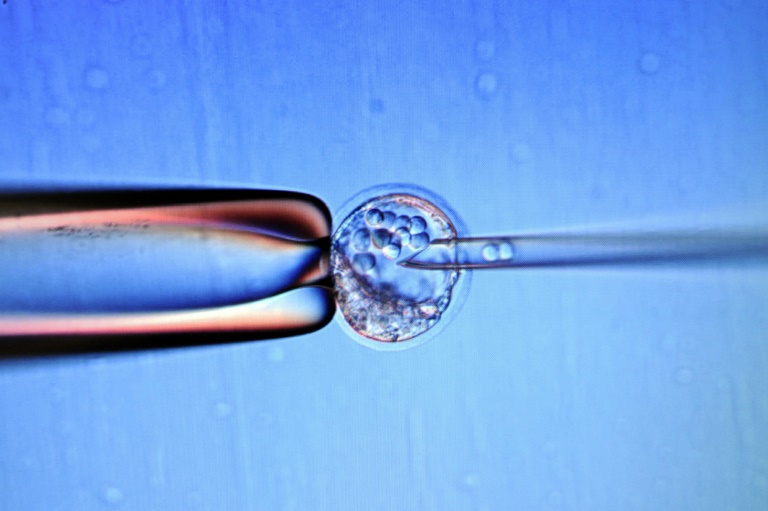
Doctors at the National Center for Child Health and Development decided to try a “bridge treatment” until the baby was big enough, injecting 190 million liver cells derived from embryonic stem cells (ES cells) into the blood vessels of the baby’s liver.
Following the treatment, “the patient did not see an increase in blood ammonia concentration and was able to successfully complete the next treatment”, namely a liver transplant, the institute said in a press release.
The baby, whose sex has not been disclosed, received a liver transplant from its father and was discharged from the hospital six months after birth.
 Embryonic stem cells are harvested from fertilised eggs and using them in research has raised ethical issues because embryos are subsequently destroyed“The success of this trial demonstrates safety in the world’s first clinical trial using human ES cells for patients with liver disease,” the institute said.
It noted that in Europe and the United States, liver cells are often available after being removed from brain-dead donors, but the supply in Japan is more limited.
That has created difficulties in managing the health of small children as they wait to grow big enough for liver transplants.
ES cells are harvested from fertilised eggs and using them in research has raised ethical issues because embryos are destroyed subsequently.
The national institute is one of two organisations in Japan allowed to establish ES cells to study new medical treatments.
It works with fertilised eggs whose use has been approved by both donors having already completed fertility treatment, according to the institute.
SHARE WITH YOUR BROTHERS, SISTERS & NEIGHBOURS!!!

Discover more from NEWS CORNER
Subscribe to get the latest posts sent to your email.
Warning: count(): Parameter must be an array or an object that implements Countable in /home/mynewsco/public_html/wp-content/themes/trendyblog-theme/includes/single/post-tags-categories.php on line 7
About author

You might also like

Bush Meat is Still Safe – Die Hard Dealers, Patronizers defy warnings
Share on WhatsApp Some consumers of bush meat in Bayelsa said on Sunday that they were not worried by the outbreak of monkeypox a viral disease transmitted from wild animals
SHARE WITH YOUR BROTHERS, SISTERS & NEIGHBOURS!!!


Remdesivir Approved by Taiwan Government to treat COVID-19
Share on WhatsApp Taiwan’s government said on Saturday it had approved Gilead Sciences’ potential COVID-19 treatment, remdesivir, to treat the illness caused by the coronavirus. Governments are racing to bolster supplies
SHARE WITH YOUR BROTHERS, SISTERS & NEIGHBOURS!!!


WCD: Embrace Contraceptives Options For Your Own Good –Group Advise
Share on WhatsApp ThankGod Emeh… As September 26 every year is marked as World Contraception Day to create global awareness for the place of contraception in society, people of reproductive
SHARE WITH YOUR BROTHERS, SISTERS & NEIGHBOURS!!!


Coronavirus: Nigeria Records 14 New Cases
Share on WhatsApp According to a statement by the Nigeria Centre for Disease Control (NCDC), Nigeria has confirmed fourteen new cases of COVID-19,. Nine of the new cases were confirmed
SHARE WITH YOUR BROTHERS, SISTERS & NEIGHBOURS!!!


COVID-19: “Disregard Rumour of Vaccines, Immunize Your Children, Wards Against Measles” –UNICEF, NOA Urges Mothers
Share on WhatsApp The United Nations Children Fund (UNICEF) and NOA has urged mothers and health care givers in Imo to continue immunising children against measles and other child-killer disesaes
SHARE WITH YOUR BROTHERS, SISTERS & NEIGHBOURS!!!


WHO Launches Plan to Fast-Track COVID-19 Vaccine
Share on WhatsApp World leaders have launched a World Health Organization initiative to speed up the research, development and distribution of vaccines, drugs and tests against the coronavirus. WHO chief


1 Comment
琳达技术员
July 30, 15:33Yes! Finally something about %keyword1%.