
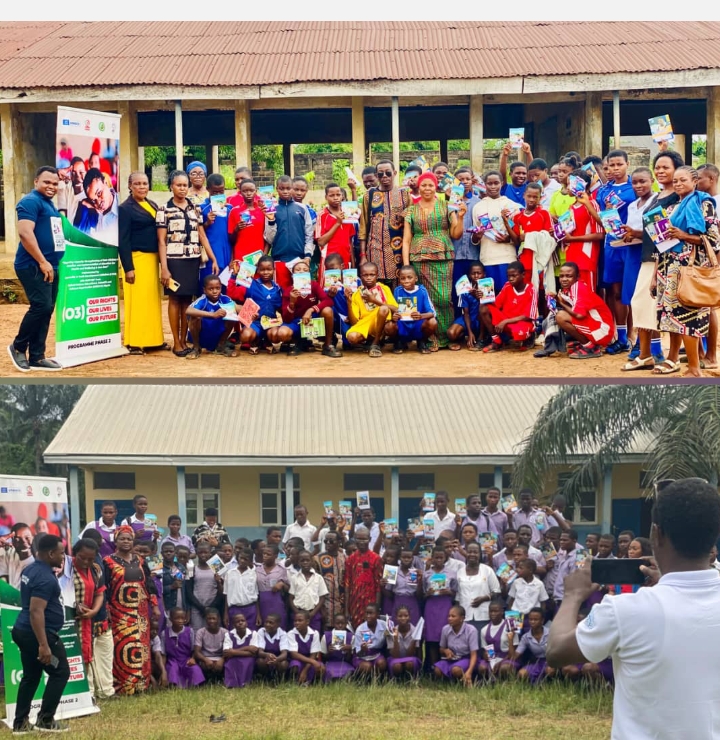
Over 21,000 young learners reached as Imo FLHE team strengthens adolescent health Services
More than 21,000 adolescent learners have been reached through a large-scale joint school health outreach conducted by the Imo State Family Life and Health Education (FLHE) State Team across 50 schools in six Local Government Areas (LGAs) of Imo State, reinforcing efforts to improve adolescent health, wellbeing, protection, and access to adolescent-friendly health services.
The outreach, which covered Orlu, Oru East, Isiala Mbano, Mbaitolu, Aboh Mbaise, and Ihitte Uboma LGAs, was implemented through a strategic partnership involving Community and Youth Development Initiatives (CYDI), the Imo State Ministry of Primary and Secondary Education, the Imo State Ministry of Health, and the Imo State Primary Health Care Development Agency.
The Imo State FLHE State Team is a multi-sectoral platform comprising government ministries, healthcare institutions, and civil society organizations working collaboratively to promote adolescent health, gender equality, child protection, and comprehensive life skills education across the state.

The outreach also featured the active participation of Adolescent Health Officers and School Health Officers from primary healthcare facilities within the target communities, helping to strengthen school-health facility linkages and ensuring that adolescents have access to accurate information, confidential counselling, and referral services within their local communities.
The intervention comes at a critical time when adolescent health and protection challenges continue to affect young people across Nigeria. According to UNICEF’s Situation Analysis of Children and Adolescents in Nigeria, adolescent pregnancy, gender-based violence, harmful practices, and limited access to adolescent-friendly health services remain significant concerns affecting the wellbeing and future prospects of millions of young people.
National data also indicate that teenage pregnancy, HIV vulnerability, child marriage, and school dropout continue to pose challenges to adolescent development and educational attainment across the country.
Against this backdrop, the joint outreach was designed not only to provide information but also to connect adolescents directly with healthcare workers and support systems capable of responding to their needs.
During the outreach, healthcare professionals and education stakeholders engaged students through interactive learning sessions, health talks, question-and-answer forums, and confidential counselling services.

Health workers also shared their contact information with students, creating a trusted pathway through which adolescents can seek guidance, ask sensitive questions, and access follow-up support without fear of stigma or judgement.
Key topics covered during the engagement included adolescent health and wellbeing, menstrual health and hygiene management, HIV prevention, prevention of teenage pregnancy, gender-based violence, bullying, school-related gender-based violence (SRGBV), female genital mutilation (FGM), child marriage, and other harmful practices that threaten the rights, health, and future of young people.
The outreach further attracted the support of development partners working to improve adolescent health outcomes in the state. MSI Reproductive Choices supported the exercise with the distribution of sanitary pads, exercise books, and educational materials, including the My First Period pamphlet, aimed at improving menstrual health literacy among adolescent girls.
Students and teachers welcomed the outreach, describing it as a timely intervention that reinforced the work already being undertaken by trained Family Life and Health Education (FLHE) Teachers in their schools. Many students expressed excitement at having direct access to healthcare workers whom they could approach confidentially for information and support regarding their reproductive health and wellbeing.
Beyond the immediate benefits of the outreach, trained FLHE Teachers across participating schools reported encouraging outcomes from the ongoing implementation of the FLHE programme.
According to the teachers, increased awareness of sexual and reproductive health issues, life skills education, gender-based violence prevention, and responsible decision-making has contributed to a noticeable reduction in cases of teenage pregnancy among learners.
Some of the trained FLHE Teachers reported that their schools recorded zero school dropouts resulting from teenage pregnancy during the 2026 academic year, a milestone they attributed to sustained FLHE lessons, improved access to adolescent-friendly health information, stronger referral pathways to healthcare facilities, and increased parental and community engagement.
The teachers further highlighted a growing culture of community support for vulnerable learners. In several communities, stakeholders have mobilized resources to assist students who are unable to pay examination fees, including fees for the West African Senior School Certificate Examination (WASSCE), thereby helping more young people remain in school and complete their education.
Speaking to newsmen during a visit to one of the participating schools in Isiala Mbano Local Government Area, Felxfame Enisire, Executive Director of Community & Youth Development Initiatives (CYDI), described the outreach as a critical step toward strengthening adolescent-friendly health services and improving access to reliable health information and support services for young people.
“Adolescents need access to accurate information, trusted adults, and youth-friendly health services that respond to their realities. This outreach is helping to bridge the gap between schools and primary healthcare facilities while creating safe spaces where young people can learn, ask questions, and seek support without fear or judgement,” he said.
Enisire noted that many adolescents still struggle to access accurate information on their health and wellbeing, making it important for schools, healthcare providers, parents, and communities to work together in supporting young people.
He further explained that the outreach is being supported by UNESCO Abuja Office under the Our Lives, Our Rights, Our Future (O3) Education for Health and Wellbeing Programme, which seeks to improve health outcomes, strengthen life skills education, promote gender equality, and enhance the overall wellbeing of adolescents and young people.
According to him, “When schools, healthcare providers, government institutions, civil society organizations, and development partners work together, we create a stronger support system for young people. Our collective goal is to ensure that every adolescent has access to the information, services, and opportunities needed to make informed decisions and reach their full potential.”
He commended the commitment of trained FLHE Teachers, healthcare workers, community leaders, and development partners who have continued to support the implementation of the FLHE programme across the state, noting that the encouraging reports of reduced teenage pregnancy and improved school retention demonstrate the positive impact of sustained investments in adolescent health and education.
“Beyond the numbers, this outreach is about giving young people hope, confidence, and access to support systems that can help them navigate challenges and achieve their dreams. Every adolescent deserves the opportunity to learn, grow, and thrive in a safe and supportive environment,” he added.
Stakeholders at the event described the outreach as a model of effective collaboration between the education and health sectors and called for sustained investments in programmes that equip young people with the knowledge, skills, and support needed to make informed decisions and reach their full potential.
The successful completion of the outreach underscores the growing impact of the Family Life and Health Education programme in Imo State and demonstrates the power of partnerships in improving adolescent health outcomes, strengthening school retention, and building safer, healthier, and more supportive environments for young people.
With over 21,000 learners reached across 50 schools and six LGAs, the outreach stands as one of the most significant school-based adolescent health engagements undertaken in the state this year, reinforcing the commitment of government institutions, civil society organizations, healthcare providers, communities, and development partners to ensuring that every young person has the opportunity to live healthy, informed, safe, and productive lives.
SHARE WITH YOUR BROTHERS, SISTERS & NEIGHBOURS!!!

Discover more from NEWS CORNER
Subscribe to get the latest posts sent to your email.
Warning: count(): Parameter must be an array or an object that implements Countable in /home/mynewsco/public_html/wp-content/themes/trendyblog-theme/includes/single/post-tags-categories.php on line 7
About author

You might also like

Maiden Edition Of World Homeopathy Day In Nigeria: Dr Okafor, Other Experts Expose Homeopathy As Complete System Of Medicine
Share on WhatsApp …also Maintain Resolve On Standard Of Practice By Chinedu Max Egere Thursday 10th of April, 2025 became a day of global history in Nigeria following the celebration
SHARE WITH YOUR BROTHERS, SISTERS & NEIGHBOURS!!!


Edo Set To Upgrade School of Nursing to College of Nursing Sciences
Share on WhatsApp The Edo State Governor, Mr. Godwin Obaseki, has said his administration will establish a college of nursing sciences in the state, as part of the government’s plan
SHARE WITH YOUR BROTHERS, SISTERS & NEIGHBOURS!!!

Nigeria Records 79 New COVID-19 Cases, Lowest In Months
Share on WhatsApp Nigeria has recorded 79 new cases of the Coronavirus. The Nigeria Center for Disease Control (NCDC) disclosed this on Sunday, making it the lowest figure in several
SHARE WITH YOUR BROTHERS, SISTERS & NEIGHBOURS!!!


Coronavirus Lockdowns Could Spark Rise in HIV Infections, Experts Warn
Share on WhatsApp If lockdowns and stay-at-home orders are succeeding in slowing the spread of the coronavirus, health experts warn that the measures could unintentionally undermine efforts to contain another
SHARE WITH YOUR BROTHERS, SISTERS & NEIGHBOURS!!!

China Reports First Omicron Case
Share on WhatsApp China has reported its first case of the fast-spreading Omicron coronavirus variant, state media said Monday. Authorities in the northern city of Tianjin confirmed the case in
SHARE WITH YOUR BROTHERS, SISTERS & NEIGHBOURS!!!


Health Minister Cautions Manufacturers Against Substandard Drugs.
Share on WhatsApp The Minister of Health, Prof. Isaac Adewole has cautioned drug manufacturers against producing substandard drugs to curb addiction and drug-related issues in the country. The minister made


0 Comments
No Comments Yet!
You can be first to comment this post!